WhatsApp Plus Pros and Cons: Is It Worth Using?
After exploring individual features, comparisons, and troubleshooting guides, it’s worth stepping back and asking the more fundamental question that brought most people to this topic in the first place: is WhatsApp Plus actually worth using? Rather than giving a quick, oversimplified answer, this article lays out the genuine pros and cons clearly, so you can weigh them against your own priorities and make a decision that actually fits your specific situation.
Why This Question Deserves a Careful Answer
It’s easy to find content online that either enthusiastically promotes WhatsApp Plus without mentioning any downsides, or dismisses it entirely as dangerous and not worth considering. Neither extreme is honest or particularly useful. The reality is that this app offers genuine, tangible benefits for certain types of users, while carrying real trade-offs that matter more to some people than others. A fair evaluation means looking at both sides seriously, without either promoting or dismissing the app unfairly.
The Genuine Advantages
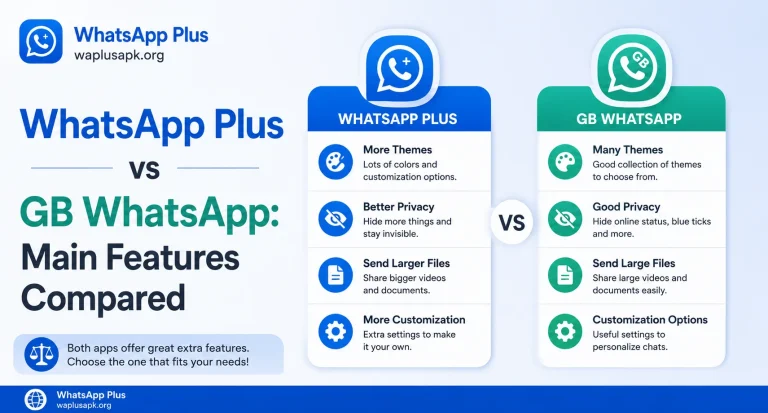
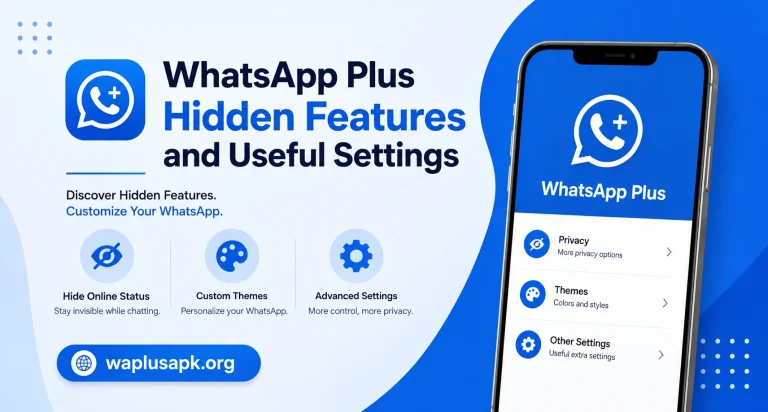
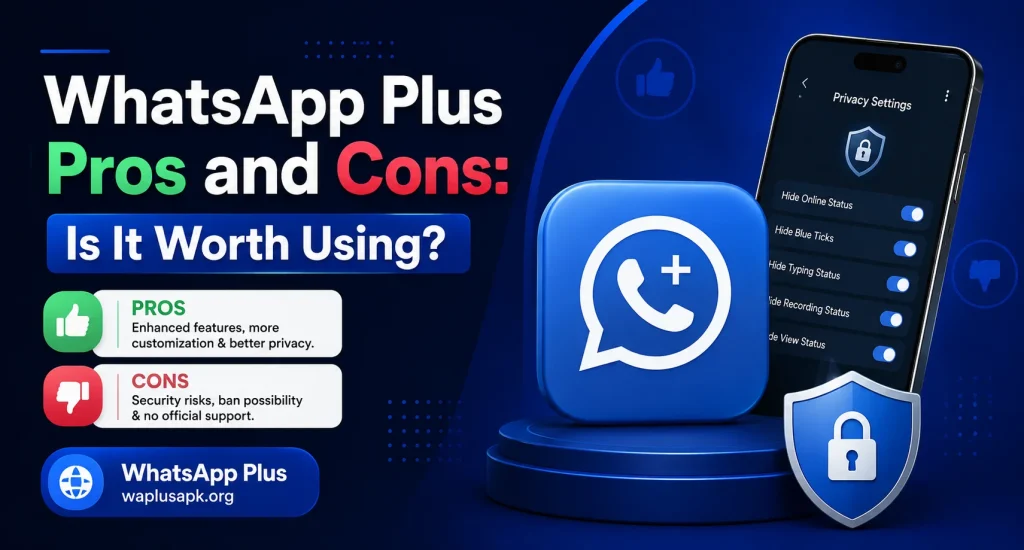
Significantly enhanced privacy control.
This is consistently the most cited benefit, and for good reason. Features like ghost mode, selective blue tick hiding, and granular online status control genuinely solve real frustrations that official WhatsApp’s simpler, more binary privacy settings don’t address.
Extensive customization options.
For users who want their messaging app to feel personal rather than generic, the theme library, font options, and wallpaper flexibility offer a level of personalization that official WhatsApp has never prioritized.
Practical convenience features.
DND mode, auto-reply functionality, and scheduled messaging add genuine everyday utility that goes beyond simple cosmetic changes, addressing real workflow and lifestyle needs.
Higher media sharing limits.
For users who frequently share large batches of photos or bigger files, the increased limits compared to official WhatsApp represent a meaningful practical improvement.
Active, engaged community support.
Despite lacking official customer service, the community surrounding WhatsApp Plus tends to be active and genuinely helpful, often providing faster practical troubleshooting than waiting on formal support channels would.
No cost involved.
Like official WhatsApp, using WhatsApp Plus doesn’t require any payment, making the enhanced feature set available without any additional financial investment.
The Genuine Disadvantages
Real risk of account restrictions or bans.
This is the most serious downside, and it’s not hypothetical. Using WhatsApp Plus violates WhatsApp’s Terms of Service, and Meta has a documented history of restricting numbers detected using unofficial clients.
No official security review or oversight.
Unlike the official app, which benefits from Meta’s dedicated security team and structured testing, WhatsApp Plus doesn’t undergo the same rigorous review process, creating inherent uncertainty about its complete safety profile.
Manual update responsibility.
Without automatic updates through an official app store, staying current requires personal effort and vigilance that official app users simply don’t need to think about.
No formal customer support.
When something goes seriously wrong, there’s no official channel to reach out to for help, leaving users dependent on community knowledge and self-troubleshooting.
Occasional stability issues.
Since the app doesn’t benefit from the same extensive testing infrastructure as the official version, bugs, crashes, and compatibility hiccups tend to be somewhat more frequent, particularly following updates.
Uncertainty around long-term availability.
Because independent developers maintain the app without any formal backing, there’s always some uncertainty about how consistently any specific version will continue being updated and supported over the long run.
Weighing These Factors Against Your Own Priorities
The honest truth is that neither the pros nor the cons objectively “win” in some universal sense — it genuinely depends on what matters most to you personally, and how you actually use WhatsApp in your daily life.
If your WhatsApp number is critical for work, business, or essential family communication, the ban risk alone might reasonably outweigh the customization and privacy benefits, since losing access even temporarily could cause real problems.
If you’re primarily using WhatsApp for casual, personal communication, and you’re willing to accept some risk in exchange for meaningfully better privacy control and customization, the trade-off might feel entirely reasonable.
If you’re someone who values having full control and personalization over apps you use daily, regardless of the specific risk level, the enhanced feature set might simply align better with how you prefer to use technology in general.
A Middle-Ground Strategy Worth Considering
As mentioned in earlier discussions throughout this series, many experienced users don’t frame this as a strict either-or decision. Keeping official WhatsApp active on your primary number while experimenting with WhatsApp Plus on a secondary number allows you to genuinely explore its benefits without exposing your most important communication channel to any risk at all. This hybrid approach lets you form your own informed opinion through direct experience, rather than relying entirely on secondhand accounts or comparison articles.
Questions Worth Asking Yourself Before Deciding
How important is my current WhatsApp number for essential communication?
If losing access temporarily would cause real problems, this significantly raises the stakes of the ban risk specifically.
How much do I personally value the specific features being offered?
If privacy controls and customization genuinely matter to your daily habits, the benefits carry more weight than they would for someone who barely notices these limitations in the first place.
Am I comfortable with the manual responsibility of updates and troubleshooting?
Some people genuinely enjoy this kind of hands-on app management, while others find it a genuine hassle not worth the trade-off.
Do I have a reasonable backup plan if something goes wrong?
Having your data backed up and a clear plan for switching back to official WhatsApp if needed meaningfully reduces the practical downside of trying the app.
What Long-Term Users Often Say
Talking to people who’ve used WhatsApp Plus consistently over extended periods reveals a fairly consistent pattern: those who took precautions early — using secondary numbers, maintaining regular backups, staying updated — tend to report largely positive, low-friction experiences. Those who jumped in without much preparation, using their primary number without backups, are more likely to report having experienced a genuinely disruptive issue at some point, whether that’s a ban, lost data, or a frustrating bug.
This pattern suggests that the “worth it” question isn’t purely about the app itself, but also significantly about how thoughtfully and carefully someone approaches using it.
Frequently Asked Questions
Final Thoughts
Is WhatsApp Plus worth using? The honest answer is that it depends genuinely on your specific priorities, your risk tolerance, and how much value you personally place on the enhanced privacy and customization features it offers. It’s not a universally “yes” or universally “no” situation — it’s a legitimate trade-off between real benefits and real risks, and the right choice varies meaningfully from person to person. What matters most is going in with realistic, complete expectations, taking sensible precautions like backups and secondary numbers, and making the decision that genuinely fits how you personally use and value your messaging app, rather than simply following popular opinion in either direction.