WhatsApp Plus vs GB WhatsApp: Main Features Compared
Anyone who’s spent time researching modified WhatsApp versions has almost certainly come across two names dominating the conversation: WhatsApp Plus and its close competitor, GB WhatsApp. Both apps occupy the same general space — independently developed, feature-enhanced versions of the official messaging app — but they’ve evolved along somewhat different paths over the years, each building a loyal following with its own particular strengths. This comparison breaks down exactly how the two stack up against each other, so you can make a genuinely informed choice between them.
Understanding the Shared Foundation
Before diving into differences, it’s worth noting how much these two apps actually have in common. Both are built on top of WhatsApp’s original code, both operate outside the official Play Store distribution system, and both violate WhatsApp’s Terms of Service in essentially the same way. Neither receives official support from Meta, and both carry similar baseline risks around account restrictions and security considerations.
Given this shared foundation, the real differences come down to design philosophy, specific feature implementation, and the particular communities that have grown up around each app over time.
Privacy Features: A Close but Distinct Comparison
Both apps offer enhanced privacy controls well beyond what official WhatsApp provides, but they approach this differently in some respects.
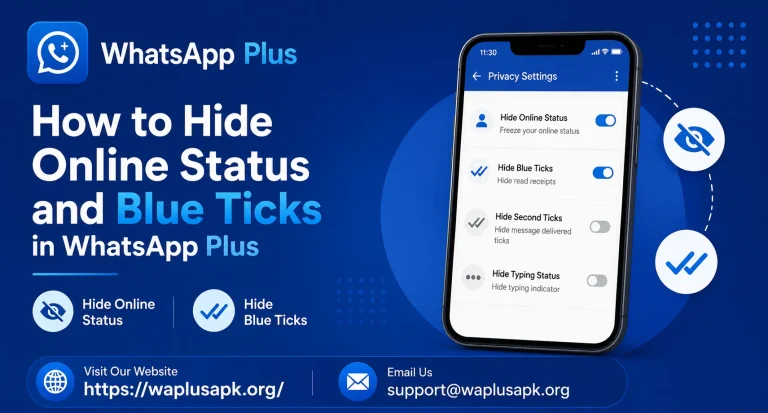
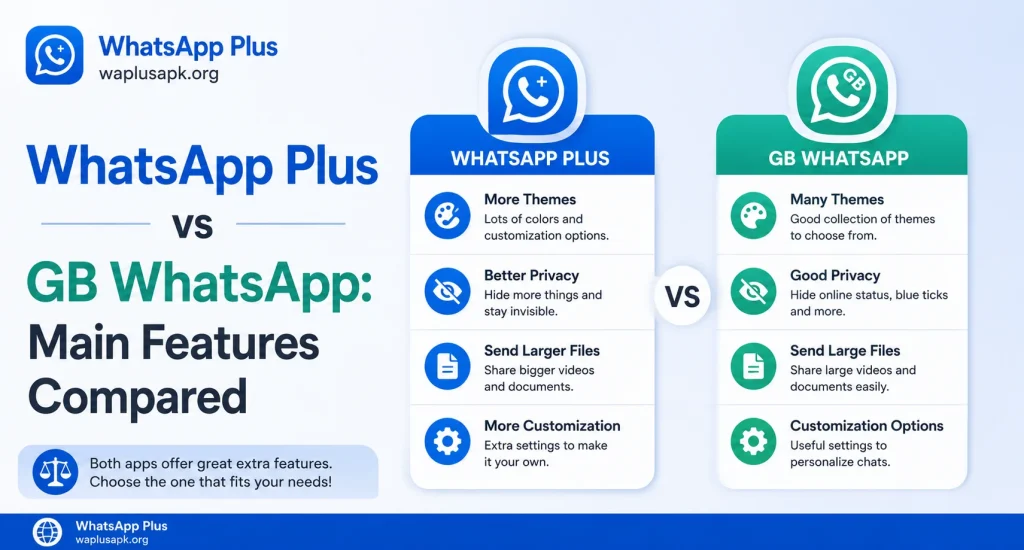
WhatsApp Plus is particularly well-known for its ghost mode implementation, which many long-time users describe as feeling more seamless and integrated compared to similar features elsewhere.
GB WhatsApp offers comparable privacy toggles — hiding online status, selective blue tick control, and similar options — but some users find the interface for managing these settings slightly less intuitive compared to WhatsApp Plus‘s more streamlined privacy menu structure.
Overall, both apps land in roughly the same territory here, and the “better” choice often comes down to personal preference regarding interface design rather than any dramatic functional gap.
Customization: Where the Apps Start to Diverge
This is one area where genuine differences in philosophy become more apparent.
WhatsApp Plus has built its reputation heavily around its enormous, actively maintained theme library, with a strong focus on visual variety and community-contributed designs.
GB WhatsApp similarly offers theme customization, and some users specifically prefer its approach to font management, describing it as offering a slightly wider range of built-in font choices without needing to source them from external theme packages.
Neither app clearly dominates this category entirely — it’s more that each has developed particular strengths that appeal to slightly different types of customization-focused users.
DND and Auto-Reply Functionality
Both apps include Do Not Disturb functionality that pauses the app’s internet connectivity without affecting other apps, along with auto-reply features for automated responses.
WhatsApp Plus users often highlight how reliably the DND toggle works across different Android versions, while GB WhatsApp users frequently point to its auto-reply feature as slightly more flexible in terms of scheduling different automated responses for different time windows.
Media Sharing Limits
Both apps raise the media sharing caps well beyond official WhatsApp’s restrictions, though the exact limits can vary between specific versions and aren’t always perfectly consistent across every release of either app.
Generally speaking, users report broadly similar experiences here, with both apps allowing considerably larger file sizes and higher image-sending limits compared to the standard app, making this a less meaningful differentiator between the two.
Update Frequency and Developer Support
This is genuinely one of the more important practical differences, since it directly affects long-term reliability.
WhatsApp Plus has maintained a relatively consistent update history over the years, with an active community regularly discussing new releases and known issues.
GB WhatsApp has also maintained consistent development, though update timing and community activity levels have fluctuated somewhat more noticeably over different periods, according to long-time users tracking both apps.
Neither situation is dramatically better or worse, but this is exactly the kind of detail worth researching at the specific moment you’re deciding between them, since development activity for any independently maintained modified app can shift over time.
Interface Design Philosophy
WhatsApp Plus tends to stick fairly closely to the general visual structure of official WhatsApp, layering customization on top of a familiar base layout. This makes the transition feel comfortable for users coming directly from the official app.
GB WhatsApp takes a somewhat similar approach but has, at various points, introduced slightly more distinct interface tweaks of its own, giving it a marginally different feel in certain menus and settings screens compared to WhatsApp Plus‘s more conservative layout choices.
Account Ban Risk: Roughly Equivalent
Since both apps violate the same Terms of Service in fundamentally similar ways, the underlying account ban risk is roughly equivalent between them. Neither app has a meaningfully better track record in this specific regard, and users of both should apply the same precautions — using secondary numbers, maintaining backups, and staying informed about detection patterns.
Which App Has the Larger User Community?
Both apps have maintained substantial, dedicated user bases over the years, though exact numbers are difficult to verify precisely given the nature of unofficial app distribution. What’s clear is that both have sustained active communities long enough to indicate genuine, lasting demand for the features they offer, rather than either being a passing trend.
Choosing Based on What You Value Most
If seamless privacy features feel like your top priority, particularly ghost mode implementation, WhatsApp Plus users often report a slightly more polished experience in this specific area.
If font variety and flexible auto-reply scheduling matter most to you, GB WhatsApp’s particular strengths in these areas might align better with your needs.
If you’re drawn primarily to theme variety and visual customization broadly, both apps offer extensive options, making this less of a deciding factor and more a matter of simply browsing each app’s specific theme library to see which one has options you personally prefer.
A Reasonable Approach: Trying Both
Since both apps are free to install and neither requires a long-term commitment, some experienced users simply try both on a secondary device or number before settling on a preference. This hands-on approach often reveals personal preferences that are difficult to fully capture through comparison alone, since small interface details and day-to-day usability quirks tend to matter more once you’re actually using an app regularly rather than just reading about its features.
Frequently Asked Questions
Final Thoughts
WhatsApp Plus and GB WhatsApp occupy remarkably similar territory, both offering genuinely useful enhancements over official WhatsApp in privacy, customization, and everyday convenience. Neither app clearly and decisively outperforms the other across every category — instead, each has developed particular strengths that appeal to slightly different preferences and priorities. Understanding these nuanced differences, rather than assuming one is simply “better” across the board, puts you in a much stronger position to choose the option that actually fits how you personally want to use your messaging app.